Somebody hands you a cable and a screen and asks whether it is right. These are what answers that. Each one is aimed at a specific way a signal chain goes wrong, and between them they will find most of what goes wrong before doors.
Three of them are video, and that is not a flourish. A frame counter in a still is one number forever, and a latency clock photographed on two screens shows the same frozen number on both — so as stills they would not merely lose something, they could not do the job they exist for. Those ship as ten-second H.264 loops at 25 fps. The rest are PNG, because a still is the whole of what they are.
No sign-up, no watermark, no email. Right-click and save, or take the lot.
The whole kit — six PNGs and three video loops at 1920×1080, with a note on what each one catches.
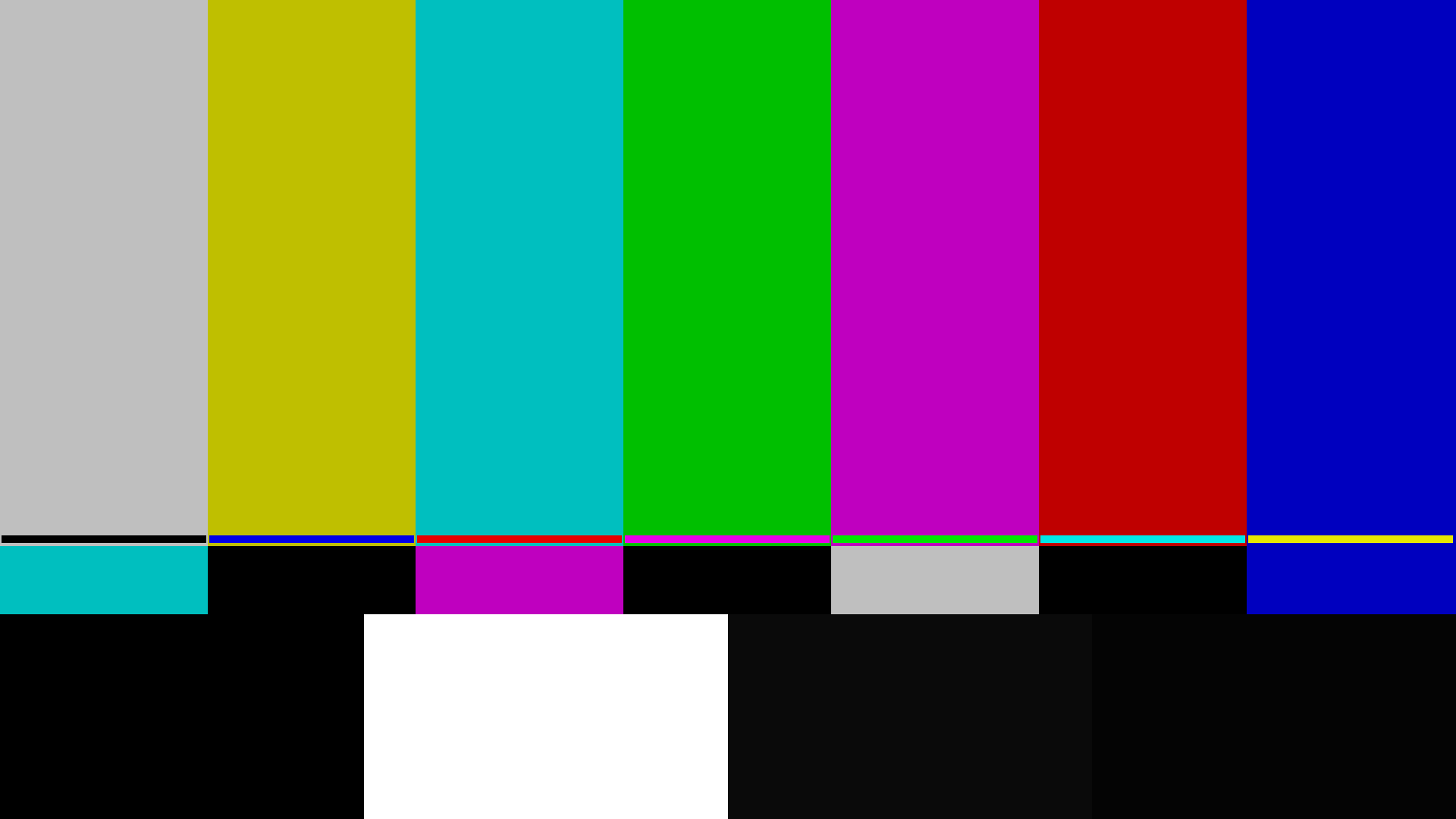
SMPTE bars PNG
Colour and levels. The pluge strip along the bottom is the one that matters: it tells you whether black on that screen is actually black.
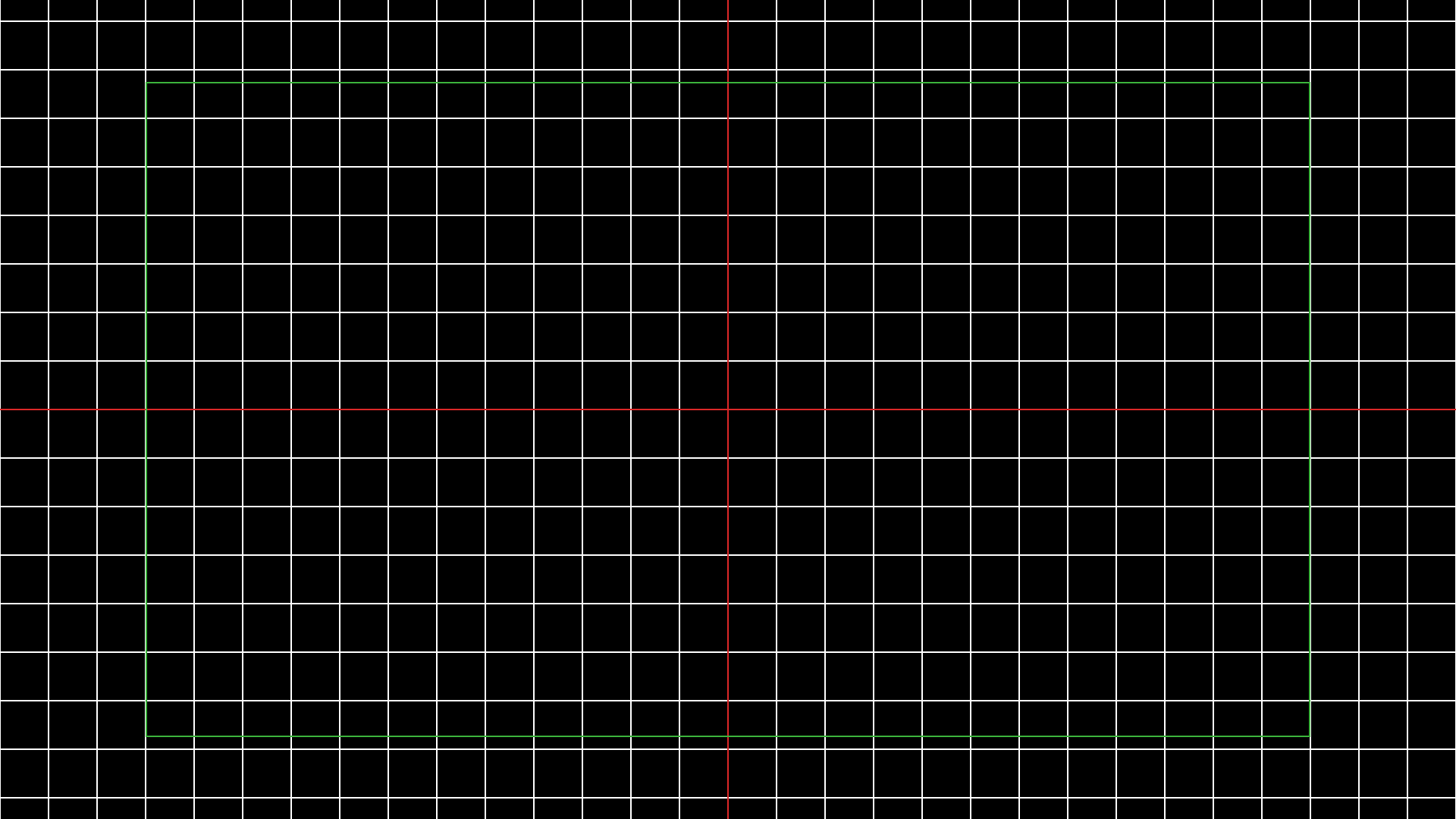
Crosshatch PNG
Geometry and convergence. Straight lines go bent long before a picture looks wrong, and the safe-area box shows what a projector is quietly eating off the edges.
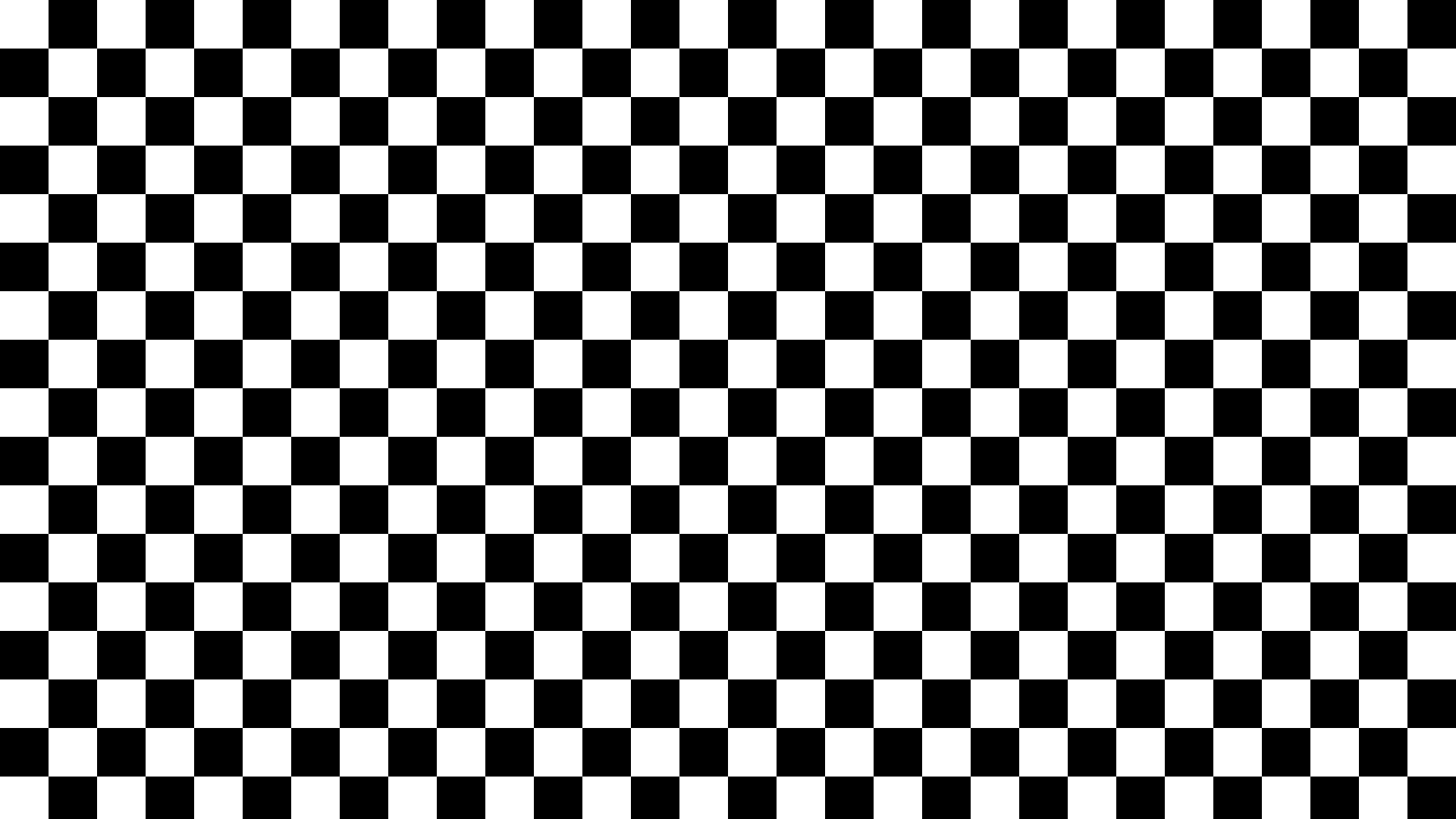
Checkerboard PNG
Scaling and overscan. A scaler that is not running 1:1 turns these squares into moire the instant you look at them.
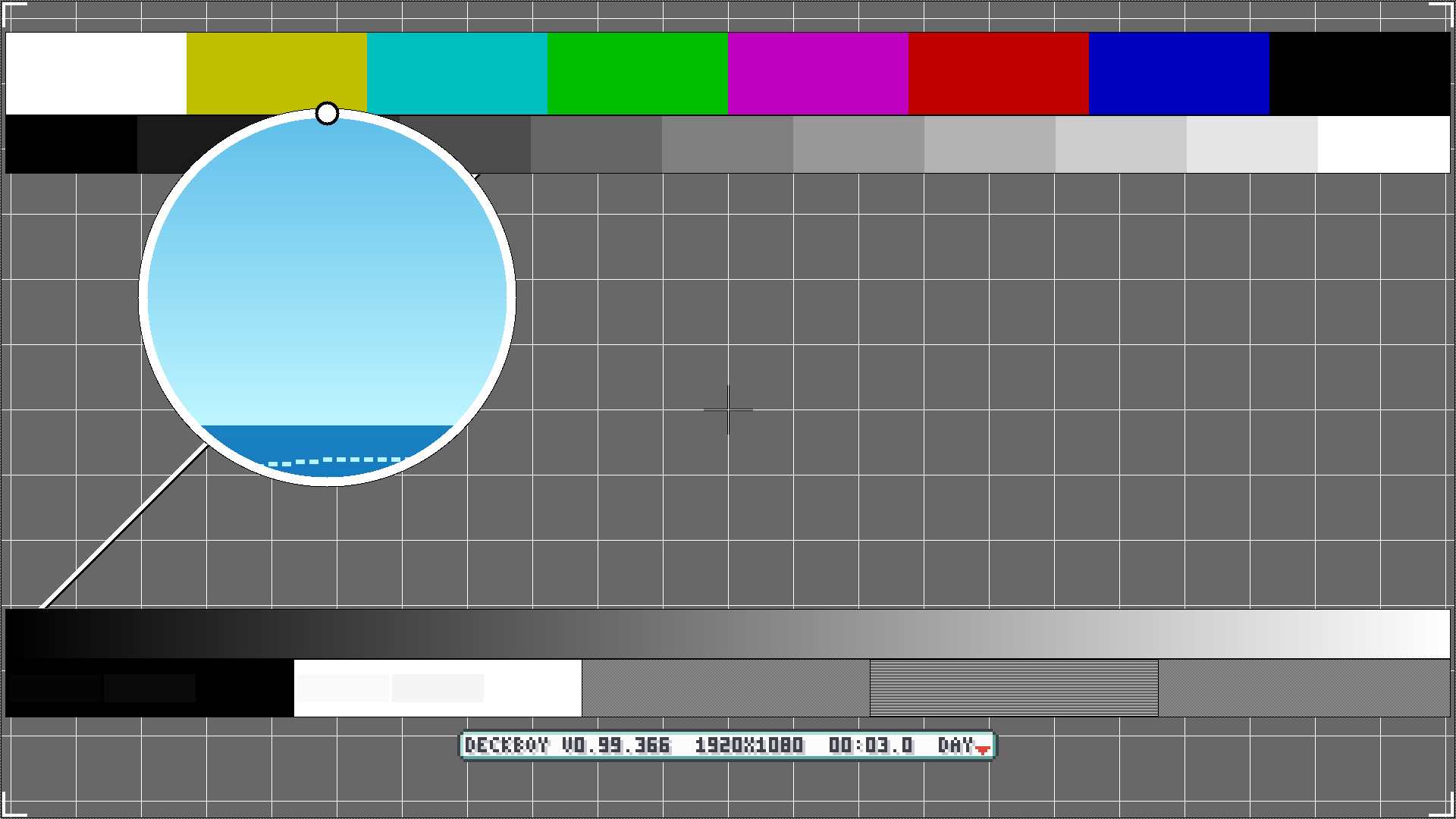
The test card MP4 + PNG
The whole chain on one card, in the PM5544 tradition: bars, a grey staircase and geometry. The video also carries a moving element, so a frozen frame cannot pretend to be a live one — which is exactly what the still, by definition, cannot show you.
Latency clock MP4
Latency, measured rather than argued about. Play it on two screens, photograph both in one shot, read the difference. The counter is exact, not a spinning wheel you have to judge.
Frame counter MP4
Dropped and repeated frames. Shoot it at a high shutter speed and count: a number that appears twice, or not at all, is a frame that did not survive the chain.
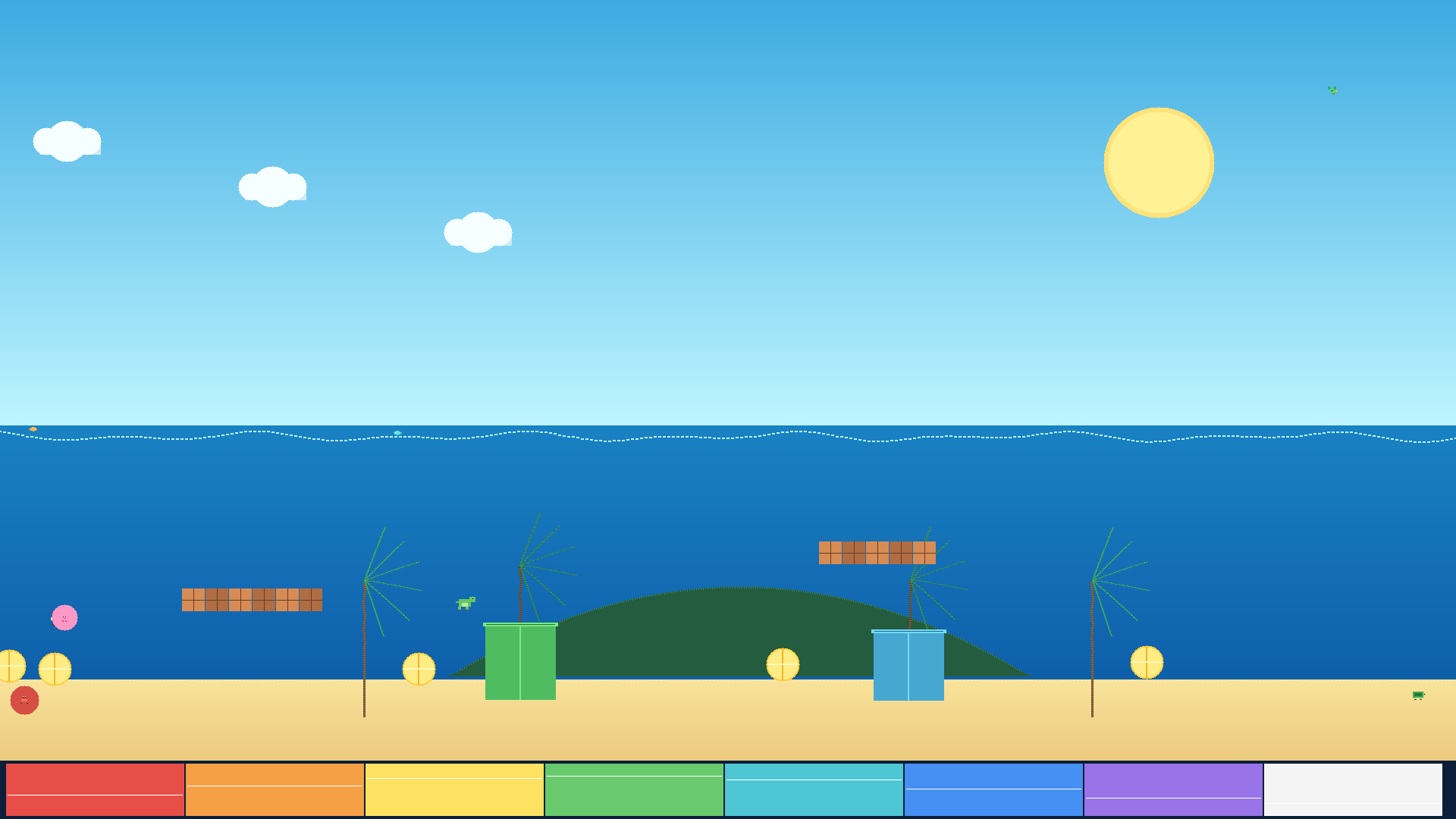
Reference picture, day PNG
A picture rather than a chart. Gradients, fine detail and saturated flats in the same frame, which is where banding and posterisation show up and bars never will.
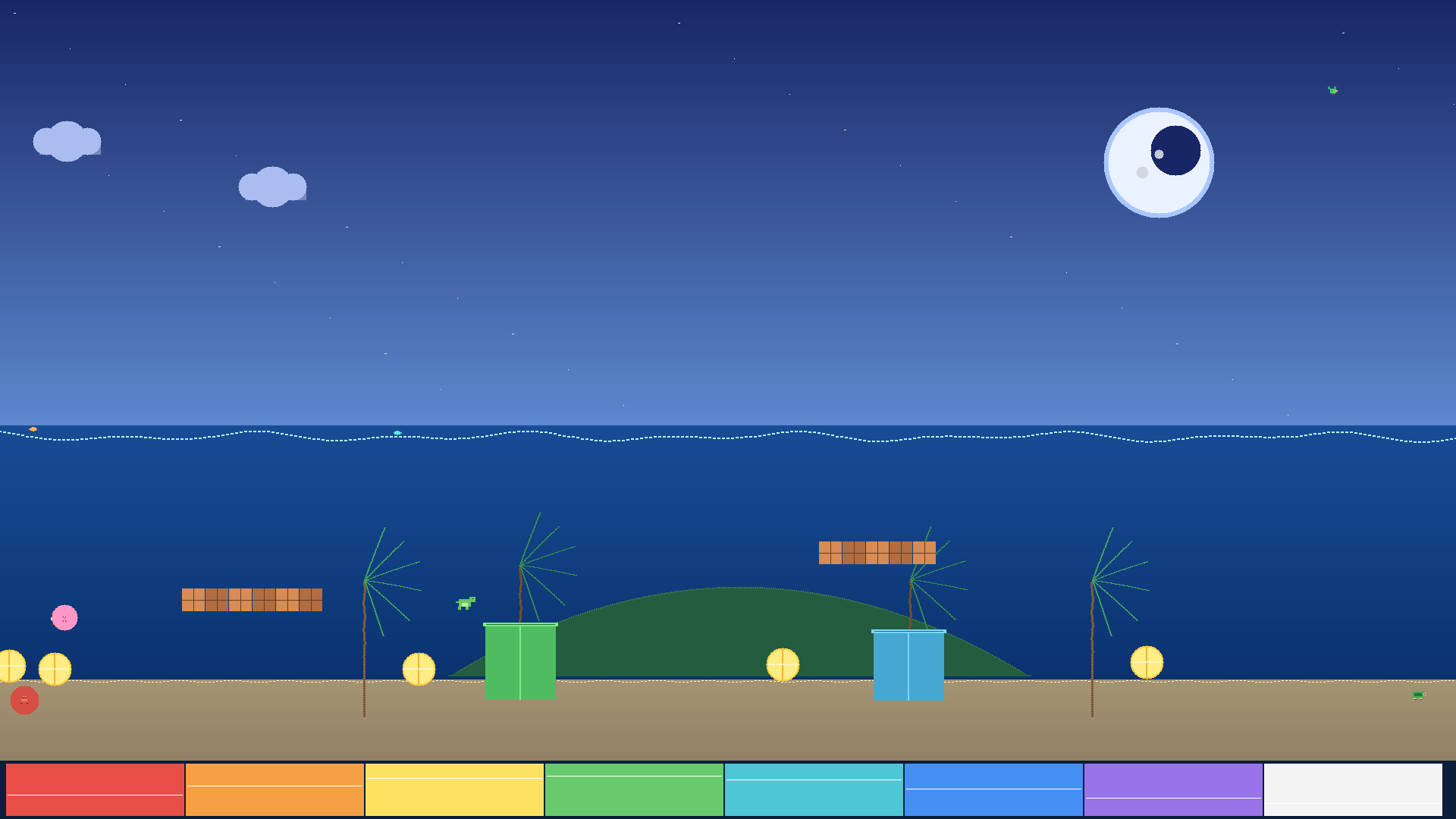
Reference picture, night PNG
The same scene after dark, for black level and shadow detail. A screen that looked perfect on bars can still crush everything below ten percent.
How to actually use them
Put the card up, then walk the chain rather than the picture. Bars first, because a black level that is wrong makes every later judgement wrong too. Then crosshatch, at the screen, from where the audience sits — keystone looks fine from the booth. Then the checkerboard, close, because that is the one that catches a scaler nobody told you about. Then a real picture, because charts cannot show you banding.
If two screens have to agree, the latency clock settles it in one photograph. If a recording or a stream is suspect, the frame counter at a high shutter speed will tell you exactly which frames went missing. Both of those want a player that is not dropping frames of its own, which is worth establishing before you trust the answer.
Where these came from
Deckboy generates them. It is a free, open-source cue player for live video, and it makes these patterns live, at whatever raster and refresh the output is actually running — which is the version you want, because a 1080p file stretched onto a 1200-line projector is testing the stretch as much as the projector. It also means the moving ones are generated per frame rather than played back from a file, so they never loop and never repeat a number.
So the files above are for the situation where you need bars on a screen in the next ten minutes and installing something is not on the table. If you are going to be doing this again next week, the application is free as well.
Where latency hides in a live chain · Check this screen in the browser · The patterns Deckboy generates